I am delighted to announce the publication of my new article, co-authored with Zhen Li [李蓁], titled “Towards Understanding Heritage Literacy” (see link). This research provides a fresh perspective on the intersection of heritage and linguistics, introducing and defining the concept of heritage literacy through an ethnographic study of Hong Kong’s Muslim communities. Drawing from literacy studies and linguistic anthropology, we explore how heritage literacy unfolds within everyday spaces and practices, highlighting its translingual, transmodal, and adaptive nature.
Our findings challenge traditional notions of heritage as static and based upon a fixed mould of cultural production. Instead, we present heritage literacy as dynamic, interconnected with everyday life, and shaped by particular discursive arrangements and semiotic features. We also introduce a typology for heritage literacy inquiry, emphasising a point of departure from the study of heritage language or heritage education, and which serves as a heuristic in multicultural and multilingual contexts. This typology is based on the following principles:
- Heritage literacy encompasses purpose-driven practices of literacy in which heritage has a defining role;
- Heritage literacy can be ordered and defined both through institutions and also everyday vernacular practices;
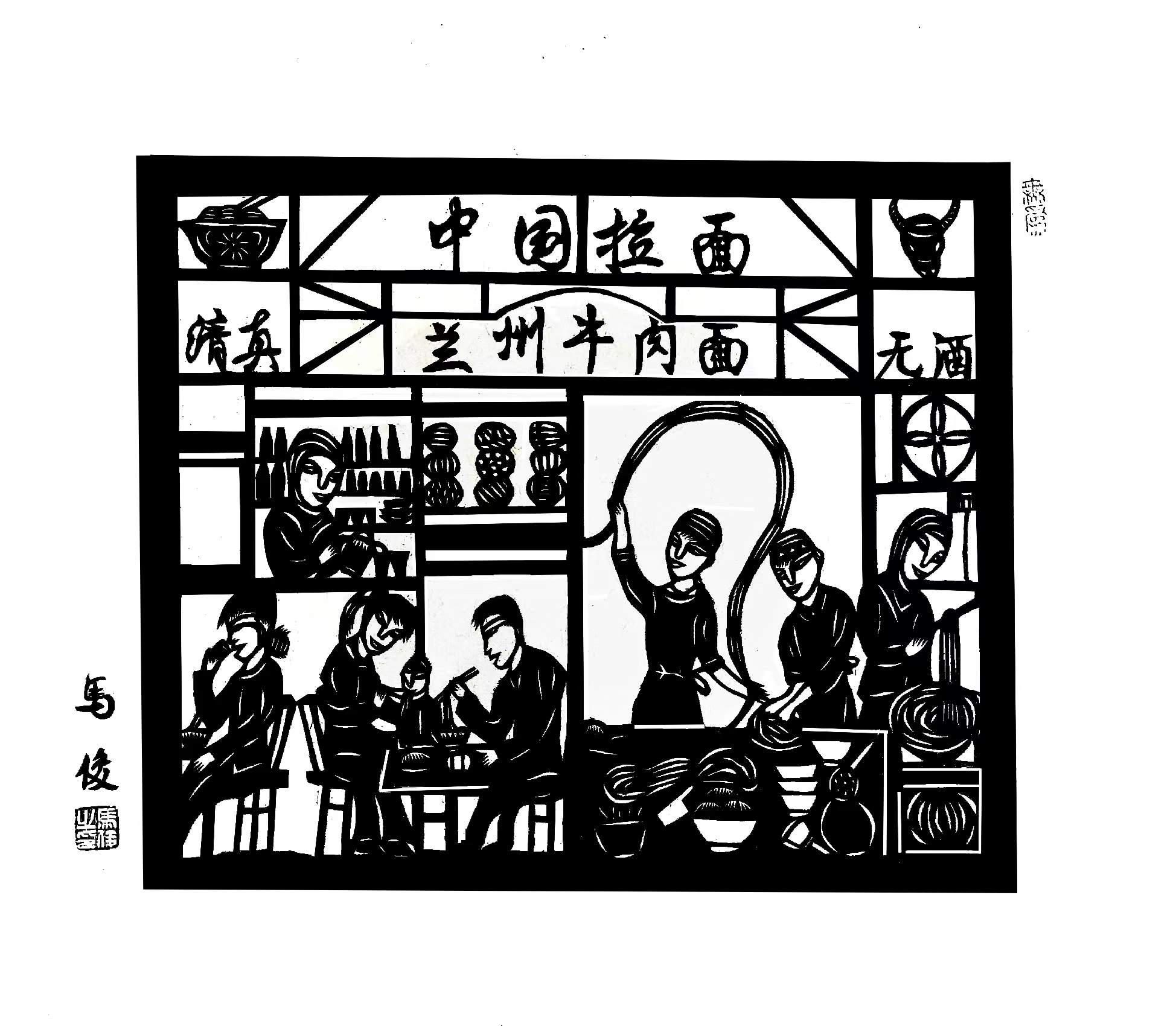
- Heritage literacy is interconnected with everyday life, including as part of religion, family, community history, art, performance, ethnic identity, and food;
- Heritage literacy involves practical engagement with material culture and sites of heritage;
- Heritage literacy functions as a sociosemiotic construct, emphasising the fluid negotiations of language with other modes such as images, bodily movement, sound, and other semiotic forms;
- Heritage literacy can be conveyed and interpreted through its emblematic quality and/or its hermeneutic quality;
- Heritage literacy is dynamic and can change across time and space, adapting to different generational and contextual shifts.
We hope this article inspires new conversations and research directions in the field. You can access the full article here https://www.tandfonline.com/doi/epdf/10.1080/01434632.2024.2422457?needAccess=true.
I would love to hear your thoughts!





 Ibrar's space